
AI Thesis Writer built for Academics
From your first chapter to your final defense, draft with sources you trust and citations you can defend.

[Estruch, 2024]
[Hu, 2023]
[Sofi, 2025]
[Mente, 2024]
[Martínez-González, 2023]
[Bonaccio, 2024]
[Trichopoulou, 2022]
[Schwingshackl, 2023]
[Salas-Salvadó, 2024]
[Babio, 2023]
[Yusuf, 2024]
[Hernández-Alonso, 2025]
[Ruiz-Canela, 2023]
[Toledo, 2024]
[Razquin, 2022]
[Sayón-Orea, 2024]
[Becerra-Tomás, 2023]
[Buil-Cosiales, 2025]
[Domínguez, 2023]
[Casas, 2024]
[Lassale, 2024]
[Galilea-Zabalza, 2025]
[Aros, 2023]
[Carlos, 2024]
[Beunza, 2022]
[Corella, 2023]
[Sánchez-Villegas, 2024]
[Fitó, 2023]
[Howard, 2025]
[Tapsell, 2024]
[Chen, 2023]
[Kim, 2024]
[Patel, 2023]
[Khan, 2025]
[Williams, 2024]
[Rodriguez, 2023]
[Brown, 2024]
[Davis, 2025]
[Taylor, 2023]
[Wilson, 2024]
[Anderson, 2025]
[Thompson, 2023]
[Walker, 2024]
[Lee, 2023]
[Wang, 2024]
[Liu, 2025]
[Zhang, 2023]
[Wu, 2024]
[Suzuki, 2024]
[Tanaka, 2023]
[Nakamura, 2025]
[Yamamoto, 2024]
[Kowalski, 2023]
[Nowak, 2024]
[Müller, 2025]
[Schmidt, 2024]
[Fischer, 2023]
[Bernard, 2024]
[Rousseau, 2025]
[Dubois, 2023]
[Petersen, 2024]
[Andersen, 2023]
[Larsen, 2025]
[Hansen, 2024]
[Nielsen, 2023]
[Jensen, 2025]
[Mendoza, 2024]
[Garcia, 2023]
[Lopez, 2025]
[Romero, 2024]
[Singh, 2024]
[Kapoor, 2023]
Chapter 3 — Literature Review
12,423 words · 47 citations
Mediterranean dietary adherence reduces cardiovascular events by 23% [Estruch, 2024]

47 sources in your library
Trusted by Universities and businesses across the world





Thesis Workflow
Every Chapter, One Workflow
See how Jenni helps draft each chapter of your thesis, from introduction to conclusion, with citations grounded in your library.
My Thesis
Long-Term Cardiovascular Outcomes of Mediterranean Dietary Adherence
Chapter 01
Introduction
Cardiovascular disease remains the leading cause of mortality worldwide, with dietary patterns identified as one of the most consistently modifiable risk factors [Estruch, 2024]. The Mediterranean dietary pattern in particular has accumulated decades of observational and interventional evidence, yet long-term outcomes data in diverse non-Mediterranean populations remain limited [Hu, 2023].
This study examines whether long-term adherence to the Mediterranean dietary pattern is associated with reduced cardiovascular event rates across a multi-ethnic cohort followed over 15 years.
↗
Chapters
01
Introduction
1,240 words
02
Literature Review
4,180 words
03
Methodology
2,640 words
04
Results
3,920 words
05
Discussion
3,420 words
06
Conclusion
980 words
Progress
Chapter 1 of 6
Real research, real results
Published in IEEE, Springer & 100+ peer-reviewed journals
IEEE Access
Adversarial Shadows in Digital Forensics
Mary, et al. · 2026

Peer reviewed
Critical Reviews in Oncology
Anti-PD1 Immunotherapy in Resected Skin Melanoma
Ochenduszko, et al. · 2024

Open access
Earth & Planetary Interiors
Earthquake Catalogue of Palu-Koro & Matano Faults
Kusumawati, et al. · 2024
Open access

BUILT FOR THESIS WRITERS
Every tool you need to defend your thesis
A purpose-built writing environment for thesis-grade work, not a chatbot with citations bolted on.
Traceable citations
Claims that links to the exact page and paragraph
Jenni connects every AI-suggested sentence to the precise location in your source PDF helping you verify in one click.
Choose from 2,600+ citation styles including APA 7th, Chicago, Harvard, IEEE, Vancouver, and journal-specific formats.
Literature Review
1
2
3
References
1.
2.
3.
Ketogenic Diets and Glycemic Control
1. Introduction
2. Methodology
Cohort
N
Δ HbA1c
Ketogenic
24
−1.2%
Low-fat
26
−0.4%
Control
25
−0.1%
3. Results
Keto
LF
Ctrl
Fig. 1. HbA1c change by cohort at 12 weeks.

Paper Draft

AI Chat


My library

Current document

Ask AI, use @ to mention PDFs or / for prompts


RESEARCH assistant
Ask questions across your library
Understand a methods section, compare findings across papers, or find the source for a claim you half-remember from chapter 2, or find which source discusses a specific concept. Jenni's AI chat reads your full library and responds with cited answers.
Source-grounded writing
AI that writes from your papers, not from the web
Upload PDFs or import collections from Zotero and Mendeley. Jenni's autocomplete can draw exclusively from your curated library, not generic training data.
You control which sources inform each section, so your literature review reflects your judgment.




Search across 248M+ academic sources…
Search
Across

Semantic Scholar
PubMed
arXiv
CrossRef
0
0.00s
Research discovery
Search 200M+ papers without leaving your editor
Semantic search across our full academic index surfaces relevant papers even when you don't know the exact keywords.
Add sources, cite, and view 10m+ full text Open Access papers — all without switching tabs.
Submission Readiness
Catch the Issues Before Your Reviewers Do
Four reviews flag what a supervisor, committee, or examiner would catch. Soundness, claims, prose, and tone.

Peer review
8 / 10
Manuscript scored against a peer-review rubric with reviewer comments on each section.
Soundness
3/4
Presentation
4/4
Contribution
3/4
Results

Strengths
Weaknesses

Claim confidence
10 issues
The claim confidence analysis addressed issues of redundant, weak, or missing citations, alongside instances of contradiction in citation arguments.
Misrepresented

Contradicted
3
Unsupported
4
Weakly supported
2
Overstated
Unverifiable
Outdated
2
Self-citation heavy
Predatory source
Citation mismatch
1

Proofread
18 edits
Whilst generally sound, the text contains some areas for improvement to comply with academic best practices.
Word choice
All
The majority of
Formality
which was interesting.
.
Grammar
be effective.
appears to be effective.
Transitions
Also,
In addition,
Overgeneralized
All
The majority of
The results provesuggest that X has an effect on Y.

Tone of voice
22 notes
Suggestions across vocabulary, syntax, punctuation, tone and flow to keep a consistent academic voice.
All Suggestions
22
Vocabulary
6
Syntax
5
Punctuation
4
Tone
3
Flow
4


Peer Review
Claim Confidence
Proofread
Tone of Voice

"The Claim Confidence feature is super useful. It flags any unsupported, overstated, or weakly supported claims."
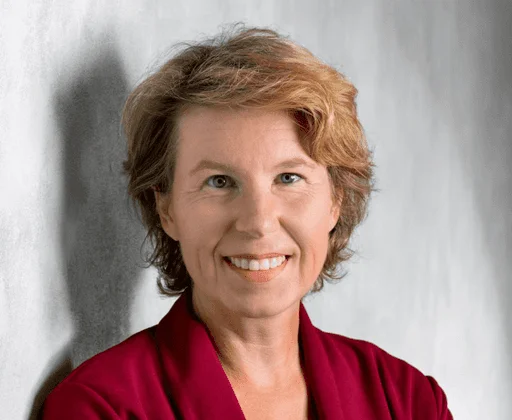
Sabine Hossenfelder
Physicist & Author of Lost in Math
"I regularly try AI tools for research and have found Jenni the best and easiest to use. Especially for rapdily re-formatting references and developing new paper ideas."

Gareth
Editor-in-chief, Taylor & Francis
A Short Guide
Writing a Thesis or Dissertation, Explained
Structure, length, ethics. What you need to know before chapter one.
01
Dissertation vs thesis
Thesis (US)
Dissertation (US)
Degree
Master's
Doctoral
Length
65 to 100 pg
200 to 300 pg
Bar
Mastery
Original work
Defense
Often internal
Formal panel
UK and parts of Europe reverse the terms. What matters is the scope, not the label.
02
How long is a PhD dissertation?
Most PhD dissertations run 60,000 to 100,000 words, or roughly 150 to 300 pages. The right length is what your committee accepts.
STEM dissertations skew shorter because findings are conveyed through figures and equations. Humanities and social sciences often exceed 250 pages. Aim for your department's median, not the longest possible.
03
The chapters of a dissertation
Most empirical dissertations follow a five-chapter structure: Introduction, Literature Review, Methodology, Results, and Discussion/Conclusion.
Some programs split Discussion and Conclusion into separate chapters, making six. Humanities dissertations often skip the empirical scaffolding entirely and organize by argument instead.
04
What is a thesis?
A thesis is the culminating research document of a degree program. It comes in three flavors: undergraduate (35 to 50 pages), master's (65 to 100 pages), and doctoral dissertation (200 to 300 pages).
All three follow a similar chapter structure. What changes is the depth, length, and the bar for original contribution to the field.
ETHICS
Can AI write my dissertation?
No, and you shouldn't want it to. But you can and should use AI as a writing partner. The OECD AI Principles and UNESCO Ethics of AI guidance both endorse AI as an augmentation tool with proper disclosure.
Major publishers including Nature, IEEE, Springer, and Elsevier permit AI assistance in manuscript preparation with a usage statement. Jenni includes a built-in disclosure aligned with these frameworks. You stay the author.
Frequently asked questions
Can I import my existing thesis draft into Jenni?
Yes. Paste your draft directly or upload it as a .docx file. Jenni preserves your formatting and citations, then layers in autocomplete, citation suggestions, and review tools as you continue writing.
Does Jenni support languages other than English?
Yes. Jenni generates and edits in 30+ languages, and the interface itself is available in 13 (including Simplified Chinese, Hindi, German, Arabic, Korean, French, and more). The Tone of Voice tool also helps non-native English researchers match academic conventions.
Is Jenni free to use for my thesis?
Yes. The free plan includes unlimited citations and access to core writing tools. Paid plans unlock higher word limits for AI generation, advanced review features, and longer chat conversations with your library.
How do I cite Jenni in my methods or acknowledgments?
Jenni includes a built-in AI usage statement aligned with the OECD AI Principles and UNESCO Ethics of AI guidance. Insert it into your draft with one click, then adjust the wording to match your target journal or institution's specific AI-use policy.
Can I collaborate with my advisor on a Jenni draft?
Yes. Share documents and libraries with collaborators, and citation style stays consistent across edits. Advisors can comment, suggest edits, and track your progress chapter by chapter.
Can Jenni help me prepare for my thesis defense?
Yes. The pre-submission review suite includes Peer Review (scores soundness and contribution), Claim Confidence (flags unsupported claims), Proofread, and Tone of Voice. These surface the issues your committee would catch before you defend.
Can Jenni write my literature review chapter?
Jenni helps you write it. It clusters your imported library by theme, surfaces contradictions and gaps across decades of research, and drafts synthesis paragraphs with every claim cited to source. You make the argumentative decisions. Jenni handles the heavy reading.
Does Jenni work with Zotero, Mendeley, or EndNote?
Yes, all three. Import your library in one click. PDFs, RIS files, and BibTeX are all supported, and Jenni uses your sources to ground autocomplete suggestions, chat queries, and citation generation across 2,600+ styles.
Can I export my thesis to LaTeX or Overleaf?
Yes. Jenni exports to .docx for Word workflows and LaTeX-friendly output for Overleaf, plus .bib for BibTeX users. Citations are unlimited on every plan including Free, so switching styles between submission rounds is a one-click operation.
How is Jenni different from ChatGPT for thesis writing?
ChatGPT generates from training data, which is why it hallucinates citations. Jenni drafts from papers in your own library, attaches real citations to every suggestion, maintains context across long documents, and includes a pre-submission review suite built for thesis work.
Make progress on your greatest work, today
Write your first paper with Jenni today and never look back
Start for free
No credit card required
Cancel anytime
Over 6m
Academics worldwide
5.2 hours saved
On average per paper
Over 15m
Papers written on Jenni